
When Cast Iron Drain Pipe Fails: A Lancaster City Repair
September 15, 2026
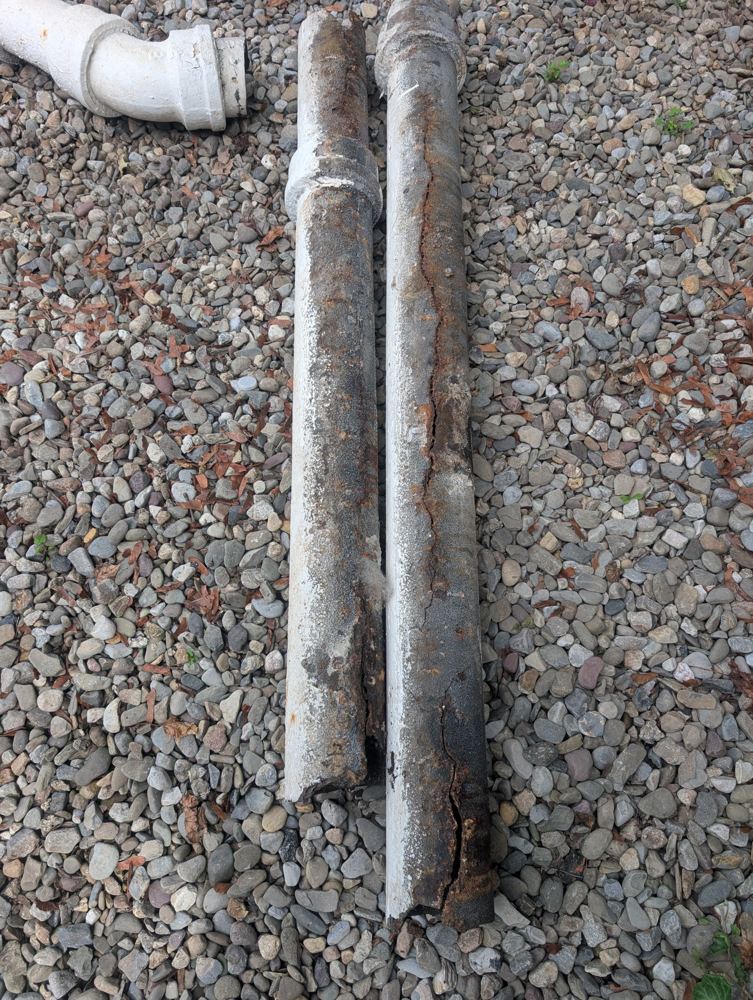
A property management company called us out to a multi-unit building in Lancaster City with a backed-up main drain. On a shared drain, a backup isn’t one unit’s problem — it’s the whole building’s at once, so it gets attention fast. But this one did something that caught everyone off guard: as the line filled up, water started pouring out of the drain pipe down in the basement. That leak was the first anyone knew there was a crack in the pipe at all.
The crack didn’t cause the backup — the backup is what exposed the crack. Under normal use a drain line runs mostly empty, with water passing straight through, so a split facing the wall never leaked and never gave itself away. It took a backup, with water rising and filling the pipe, to push water out through that crack and finally reveal it. And it had stayed hidden well: the crack faced the wall, the outside of the pipe had been painted over years ago, and the basement was unfinished — so there was nothing to see, and in an open basement, nothing to smell. We ran the machine out the main to clear the backup and get things flowing again, and once we could see what we were dealing with, we replaced about ten feet of failed cast iron that had been quietly rotting for years.
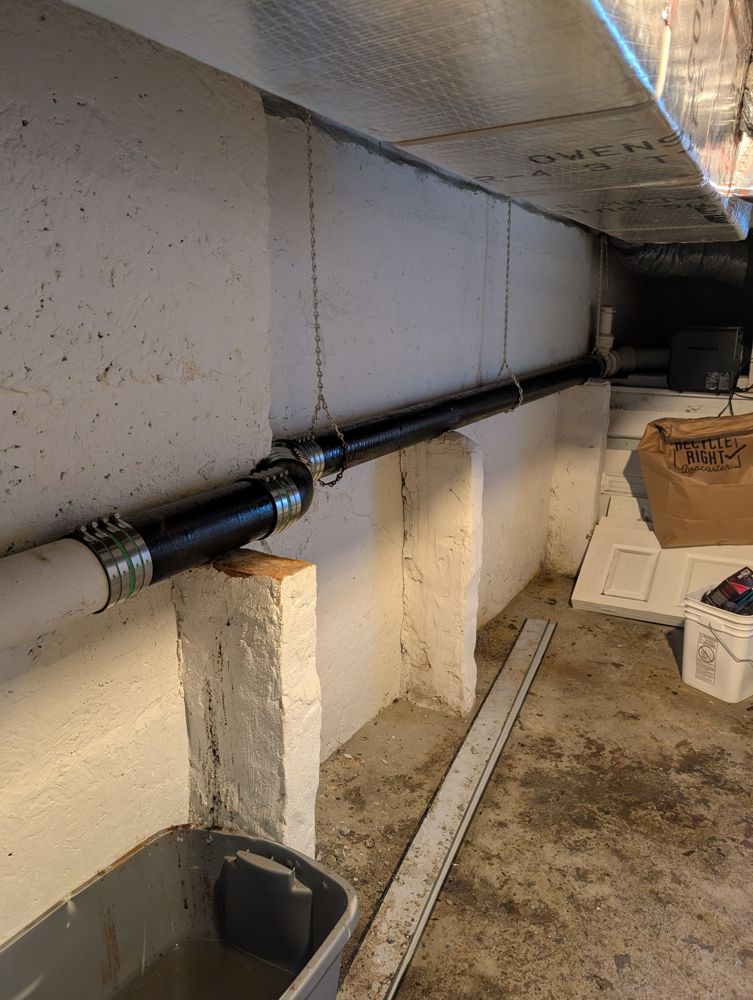
Cast iron drains are everywhere in Lancaster City and the older parts of the county — in houses, and in the multi-unit buildings that often started as houses. Whether you live in the home or manage a building full of tenants, here’s what’s worth understanding about how that pipe ages, and how to get more good years out of it.
Why cast iron fails from the inside out
Cast iron was the standard for drain and waste pipe for the better part of a century, and when it’s healthy it’s tough stuff. But it doesn’t last forever, and the way it goes is usually invisible until it isn’t. The pipe corrodes from the inside — the bottom of a horizontal run, where water and waste sit and flow, wears first. Over decades that channel rusts thinner and thinner while the top of the pipe still looks solid. Rust and scale build up along the walls too, narrowing the opening and grabbing everything that goes past. That’s why an old cast iron line starts catching and clogging more often as it ages, even when nothing about how it’s being used has changed.
Eventually the wall gets thin enough that it cracks, splits along its length, or rots through completely. The section we pulled out of this Lancaster City building had split right down its side — and because that split faced the wall behind a coat of old paint, no one knew it was there until a backup pushed water out through it. From what you could see, it still looked like pipe; inside, it was long past done.
The warning signs to watch for
You usually get some notice before a cast iron line is in real trouble. Worth paying attention to:
- Drains that back up or run slow again not long after they’ve been cleared
- Gurgling from drains, or a sewer smell that comes and goes (an unfinished basement can hide that smell, like it did on this job)
- Clogs turning up across several fixtures — or, in a multi-unit building, across more than one unit — not just one spot
- Damp spots, staining, or a musty smell near a basement wall or floor along the drain line
Any one of these can have a simpler cause. But when they keep coming back in an older building, the pipe itself is often what’s tired. And a backup is worth taking seriously for exactly the reason this job showed: clearing the clog gets you flowing again, but it’s also the moment to find out what shape the pipe is in — because that’s how hidden problems, like a crack nobody knew about, come to light.
How to get more life out of cast iron
You can’t stop cast iron from aging, but you can slow it down and steer clear of the worst of it:
- Skip the chemical drain cleaners. The caustic ones eat scale and pipe alike, and on old cast iron they do real damage. A cable machine or a professional cleaning clears the line without cooking it.
- Keep grease and the wrong things out of the drain. Grease coats and builds, and it’s a big part of what narrows an old line over time. In a rental, that’s worth a word to tenants.
- Have a slow drain looked at early. A line that clears slower each time is telling you something. Catching it early can mean a cleaning instead of a repair.
- Get the line cleaned and camera-inspected periodically. Running a camera down the line tells you exactly what shape the pipe is in — whether it’s got years left or a bad section about to turn into an emergency. On a shared drain serving multiple units, that’s cheap insurance against the kind of backup that hits everyone at once.
Repair the bad section, or replace the run
Cast iron rarely fails everywhere at once. Often, like this job, one stretch is cracked or channeled out while the rest still has life in it — and the right fix is to cut out the failed section and replace it, not tear out the whole system. Other times a line is far enough gone across the board that full cast iron pipe replacement is the honest call. Either way, the point is to look at what’s actually there and fix what needs fixing, not sell you more than the pipe needs.
Common questions
How do I know if my backups are the pipe itself, or just a clog? A one-off clog usually clears and stays clear. When backups keep coming back after a cleaning, show up across more than one fixture or unit, or arrive with gurgling and a sewer smell, the pipe itself is often part of the story. A camera run down the line settles it — you see exactly what shape the cast iron is in, including hidden trouble like the crack on this job that no one knew was there.
Can you repair just the cracked section, or does the whole line have to be replaced? Often just the bad section. Because cast iron rarely fails everywhere at once, when one stretch is cracked or worn through and the rest is sound, we cut out that piece and replace it — like the roughly ten feet we did on this Lancaster job. When a line is far enough gone throughout, full replacement is the right move, and we’ll tell you straight which situation you’re in.
If your drains keep backing up, or you’ve got an older Lancaster County home or building and you’re wondering what shape the cast iron is in, that’s exactly the kind of work we do. We run the machine, we can camera the line to see what’s really going on, and we handle the drain cleaning and the sewer and drain line repair that comes after if the pipe needs it. We’ve been doing this around Lancaster and the rest of the county since 1961.
Call us at (717) 872-2850.