
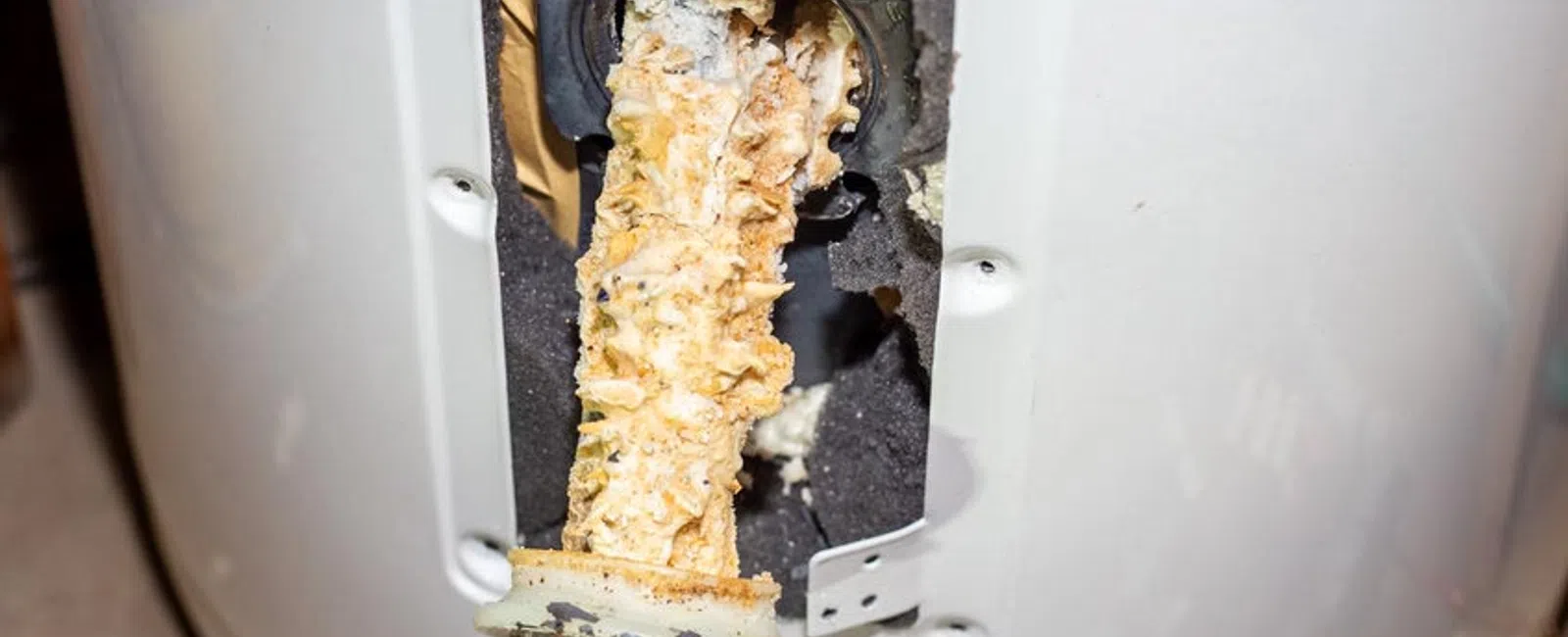
Sediment in a water heater is a layer of mineral deposits, sand, and rust that settles at the bottom of the tank over time. Common symptoms include rumbling or popping noises during heating, reduced hot water supply, water that takes longer to warm up, rusty or discolored hot water, and small leaks near the drain valve. Flushing the tank annually removes most sediment before it causes lasting damage, while severely neglected tanks may need professional service or full replacement.
What Is Water Heater Sediment
Every gallon of water that enters your water heater carries dissolved minerals, primarily calcium and magnesium, along with small amounts of sand, rust, and other particulates from the supply line. As that water sits in the tank and heats, the dissolved minerals separate and settle to the bottom. Over months and years, that layer thickens into a hard, gritty deposit that looks something like wet sand or chalky paste.
The thicker the sediment layer gets, the more it interferes with how the water heater is supposed to work. In a gas water heater, the burner sits directly beneath the tank, and sediment forms an insulating barrier between the flame and the water. The burner has to run longer and hotter to deliver the same amount of hot water. In an electric water heater, the lower heating element can become buried in sediment, leading to overheating, burning out, or cracking the tank lining around it. Either way, sediment shortens the unit's life and drives up energy costs.
How quickly sediment accumulates depends on water hardness, daily usage, and how often the tank has been flushed. Homes with very hard water can see significant buildup in a year or two, while homes with softened water might go five or six years before sediment becomes a problem.
Symptoms of Sediment Buildup in Your Water Heater
Catching sediment early is the difference between an easy maintenance flush and a full replacement. The warning signs are usually subtle at first, then they start stacking up.
Rumbling, Popping, or Banging Noises
This is the classic and most telling sediment symptom. As the burner heats the bottom of the tank, water gets trapped under and inside the sediment layer. That trapped water turns to steam, expands rapidly, and bursts free with a rumbling, popping, or sometimes banging sound. Many homeowners describe it as the heater "talking" or sounding like a coffee pot brewing.
A new or well-maintained water heater operates almost silently. If yours has started making noticeable sounds during heating cycles, sediment is the most likely culprit. The noise tends to get louder and more frequent as the buildup thickens.
Reduced Hot Water Supply
A 50-gallon tank with several inches of sediment at the bottom no longer holds a full 50 gallons of usable water. The sediment takes up tank volume, and the insulating layer reduces the heater's efficiency at reaching the set temperature. The result is shorter showers, slower recovery between uses, and a noticeable drop in the amount of hot water the household has available.
If the family suddenly cannot make it through morning showers without someone getting a cold rinse, and nothing else has changed, sediment is high on the list of suspects.
Slow Hot Water Recovery
A water heater free of sediment should reheat a tank of water in 30 to 60 minutes for a gas unit or 1 to 2 hours for an electric model. When sediment insulates the heat source from the water, recovery time stretches noticeably. You might notice it most after back-to-back showers or running a hot wash cycle while someone is in the shower.
Rusty or Discolored Hot Water
When sediment includes iron particles or has caused the protective tank lining to deteriorate, hot water can come out tinted brown, red, or yellow. The discoloration is usually worse first thing in the morning, after the water has been sitting in the tank overnight, and clears up after a few seconds of running the tap.
To confirm the water heater is the source rather than the supply pipes, fill several buckets from a hot water tap. If the first bucket run is discolored but the rest are clear, the tank is likely the culprit. If all buckets stay discolored, the issue may be elsewhere in the plumbing.
Leaks Near the Drain Valve
The drain valve at the bottom of the tank is the unit's lowest point, making it the natural collection spot for sediment. Over time, hardened sediment can damage the valve seal, prevent it from closing fully after flushing, or create enough corrosion around the threads to cause a slow leak. A wet patch at the base of the tank, especially around the drain valve, is a sign that sediment has already begun to cause trouble.
Higher Energy Bills
Sediment forces the water heater to work harder for the same result. A burner that runs longer or a heating element that cycles more frequently both draw more energy from your utility supply. Many homeowners notice a creeping increase in their gas or electric bill before they connect it to the water heater. If your bills have been climbing steadily without an obvious explanation, an inefficient water heater is worth checking.
How to Flush a Water Heater to Remove Sediment
Flushing the tank is the standard fix for sediment buildup and is one of the most important maintenance tasks any water heater owner can do. The process is straightforward for most healthy units, though it requires care to avoid damaging the drain valve or scalding yourself.
Start by turning off the power to the water heater. For an electric unit, switch off the breaker at the electrical panel. For a gas unit, turn the thermostat to the pilot or vacation setting. Then shut off the cold water supply line entering the top of the heater.
Attach a garden hose to the drain valve near the bottom of the tank and run the other end to a floor drain, utility sink, or outdoors where the hot water can safely discharge. Open a hot water faucet somewhere in the house. This breaks the vacuum, allowing the tank to drain properly. Then open the drain valve.
Let the water flow until it runs completely clear. Cloudy or gritty water at first is normal and exactly what you are trying to remove. For tanks that have not been flushed in years, the water may contain rusty or foul-smelling particles. If the flow slows or stops because of sediment blocking the valve, briefly open the cold water supply to flush the obstruction through.
Once the discharge runs clear, close the drain valve, remove the hose, and turn the cold water supply back on. Let the tank fill, watching for water to flow steadily from the open hot water faucet, which confirms the tank is full. Then restore power to the unit and allow it to bring the water up to temperature.
When DIY Flushing Is Not Enough
Flushing works well for tanks that have been regularly maintained, or that show only mild symptoms. For tanks that have been out of service for many years, the situation is often more complicated.
Hardened sediment can resist flushing entirely. In severe cases, the buildup forms a solid layer that the water cannot wash out, and additional steps are needed to break it up. Plastic drain valves on older units sometimes crack or fail to close fully after being opened for the first time in years, leading to a small flood if not caught quickly. The heating element on an electric water heater can burn out the moment the tank is empty if the power was not properly shut off first.
If your water heater is more than 8 years old, has never been flushed, shows multiple sediment symptoms at once, or has any signs of a leaking tank, a professional service call is the safer option. A licensed plumber can flush the unit properly, replace a failed drain valve if needed, inspect the anode rod and heating elements, and give you an honest read on whether the unit has years of life left or is approaching replacement.
Tom Falk Plumbing and Heating has been servicing water heaters for homeowners since 1961. Our licensed plumbers handle sediment flushes, anode rod replacement, and full water heater inspections, and we will tell you straight whether a flush will solve the problem or whether the unit is past the point where maintenance can save it.
How to Prevent Sediment From Building Up
A few habits can dramatically slow sediment accumulation and keep your water heater running clean for years.
Flush the tank once a year, every year, without exception. Annual flushing is the single most effective way to extend the life of a water heater, and it takes less than an hour. Mark it on the calendar the same way you would change a furnace filter or test a smoke detector.
If you have hard water, consider installing a water softener. Hard water is the primary source of sediment, and softening the water before it enters the heater drastically reduces mineral deposits over time. The investment in a softener typically pays for itself through longer water heater life, more efficient operation, and reduced wear on fixtures, pipes, and appliances throughout the home.
Inspect the anode rod every two to three years. The anode rod is a metal rod inside the tank designed to corrode in place of the tank walls. As it dissolves, it protects the steel from the same corrosion that would otherwise destroy the tank. A heavily worn or fully dissolved rod leaves the tank unprotected and accelerates both sediment formation and tank failure. Replacing it is inexpensive and dramatically extends the unit's life.
Set the temperature to a reasonable level, typically 120°F. Higher temperatures accelerate mineral precipitation and speed up sediment accumulation, in addition to wasting energy and posing a scalding risk.
Frequently Asked Questions
How often should I flush my water heater?
Most water heaters benefit from an annual flush. Homes with very hard water or heavy daily usage may need flushing more often, while homes with softened water can sometimes go two years between flushes without significant buildup.
Can sediment damage my water heater permanently?
Yes, prolonged sediment buildup can cause permanent damage. It corrodes the tank lining, burns out electric heating elements, warps gas burners, and can crack the tank itself. Once the tank is compromised, the only fix is replacement.
Is it safe to use water from a heater with sediment?
The water is generally safe to use, though it may look discolored or have a slightly metallic taste during heavy sediment events. The bigger concern is the damage being done to the heater itself, not the safety of the water for bathing or washing.
Why does my water heater make a popping sound?
Popping sounds almost always mean sediment has built up at the bottom of the tank. Water trapped under the sediment layer flashes to steam during heating, creating the popping noise as the bubbles escape.
Can I flush a water heater that has never been flushed?
You can try it, but tanks that have been out of service for many years often have hardened sediment that resists flushing, and the drain valve may not seal properly afterward. For an older neglected unit, having a licensed plumber handle the first flush is the safer approach.
If your water heater is making rumbling noises, running out of hot water faster than it used to, or showing any signs of sediment buildup, do not wait for it to fail. Call Tom Falk Plumbing and Heating at 717-872-2850 or book service online. Our licensed team will inspect the unit, handle the flush properly, and let you know whether maintenance will get you years of additional life or whether it is time to plan a replacement.


