
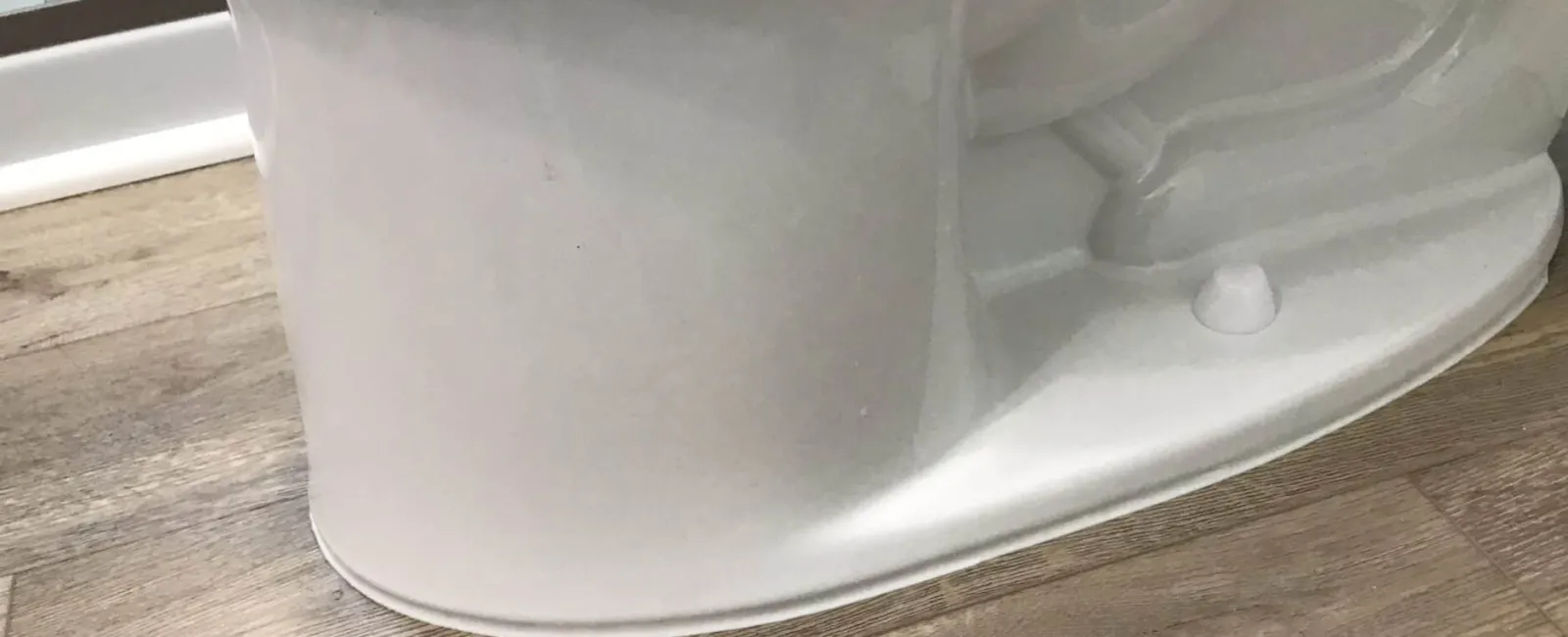
A toilet leaking at the base is almost always caused by a failed wax ring, loose closet bolts, a cracked toilet base, or condensation forming on the tank and dripping down. The wax ring is the most common culprit, since it sits hidden between the toilet and the floor flange and slowly deteriorates over time. Most base leaks can be repaired the same day, but ignoring the issue can lead to subfloor rot, ceiling damage in the room below, and a much larger repair bill.
What a Toilet Base Leak Actually Means
When water shows up around the bottom of your toilet, it is rarely just a cosmetic problem. The toilet is sealed to the floor by a wax ring that compresses between the porcelain base and the drainpipe flange. As long as that seal holds, every flush sends water cleanly down the drain. The moment the seal fails, water from each flush escapes onto the floor, often pooling toward the front or sides of the toilet, where you finally notice it.
Catching this early matters more than people realize. A toilet flushes thousands of times a year, and each flush pushes a small amount of contaminated water past a failed seal. The water seeps under the toilet, soaks into the subfloor, and creates the perfect environment for mold, wood rot, and structural damage. Homeowners who put off this fix often end up replacing not just the wax ring but sections of flooring, joists, or drywall.
Common Causes of a Toilet Leaking at the Base
Several distinct problems can cause water to appear at the bottom of a toilet, and each one points to a different fix. Identifying which is happening in your bathroom is the first step.
A Failed or Compressed Wax Ring
The wax ring is the most common cause of a toilet base leak. This soft, doughnut-shaped seal sits between the toilet's base and the closet flange in the floor, forming a watertight connection that withstands every flush. Over time, the wax compresses, dries out, or shifts out of position, especially if the toilet has been rocking on an uneven floor or was reinstalled at some point without a fresh ring.
Once the wax ring fails, water leaks slowly with each flush. The leak is often intermittent, meaning the floor stays dry between flushes, but small puddles appear shortly after. A failed wax ring typically requires removing the toilet, scraping off the old wax, and installing a new seal.
Loose Closet Bolts
The two bolts at the base of your toilet, called closet bolts, anchor the toilet to the floor flange and keep constant pressure on the wax ring. If those bolts loosen, even slightly, the toilet starts to rock when you sit on it. That tiny bit of movement breaks the wax seal and creates a leak path.
Sometimes this is an easy fix. Gently tightening the bolts a little at a time, alternating sides to keep pressure even, can restore the seal. The key word is gently. Overtightening cracks the porcelain base, which is a far more expensive problem than a leak.
A Cracked Toilet Base or Tank
A hairline crack in the toilet's porcelain can release small amounts of water onto the floor with every flush. These cracks often form near the base or along the bottom of the tank, and they tend to widen over time. Look closely at the porcelain for these dark lines, and check whether the water around the toilet appears to come from above the floor rather than from below.
If the crack is in the toilet itself, repair is rarely worth it. Epoxy patches rarely hold permanently against the constant pressure of flushing water, and a cracked toilet is one of the most likely candidates for a sudden catastrophic break. Replacement is the right call.
A Damaged or Misaligned Closet Flange
The closet flange is the metal or PVC ring set into the floor that connects the toilet to the drainpipe. If the flange cracks, breaks, or sits too low relative to the finished floor, the wax ring cannot compress properly, and the seal will fail no matter how many times you replace it.
This is one of the more common reasons a "fixed" toilet keeps leaking. Someone installs a fresh wax ring, the leak comes back within weeks, and the actual cause is a damaged flange underneath. Repairing or replacing the flange requires lifting the toilet and addressing the floor connection directly.
Tank Condensation Dripping Down
Not every wet floor near a toilet means a seal failure. In humid weather, especially in summer, cold water filling the tank can cause condensation to form on the outside of the porcelain. The droplets run down the tank, collect in the bowl, and drip to the floor, looking identical to a real leak.
The test is simple. Wipe the toilet completely dry, place a few paper towels around the base, and check them after several hours without flushing. If they stay dry but get wet after a flush, the leak is real. If they get wet on their own in humid conditions, you are looking at condensation, not a seal failure.
How to Diagnose Your Toilet Base Leak
Before deciding on a fix, you want to know exactly what is leaking and when it happens. Wipe the entire toilet and the surrounding floor completely dry with a clean towel. Place dry paper towels around the base on all sides. Wait a few hours without flushing and check them. If the towels are wet, the leak is happening between flushes, which often points to condensation, a tank leak, or a cracked base.
If the towels are dry after several hours, flush the toilet and watch closely. Water appearing immediately or within a minute or two of the flush almost always indicates a failed wax ring or a flange problem. Note where the water emerges first, since a leak at the front of the toilet usually indicates a wax ring issue, while water that seems to come from the supply line area points to a different problem entirely.
When to Fix It Yourself and When to Call a Plumber
Replacing closet bolts or tightening them carefully is reasonable for most homeowners. Wiping down a tank to check for condensation is a quick weekend task. Beyond that, the picture changes.
Replacing a wax ring sounds simple, but it requires shutting off the water, draining the tank and bowl, disconnecting the supply line, lifting the toilet straight up without cracking the porcelain, scraping off old wax, setting the new ring correctly, lowering the toilet back into place with even pressure, and reconnecting everything without leaks. Any misstep can either leave you with a fresh leak or damage the new wax ring during installation, sending you back to square one.
A cracked toilet, a damaged closet flange, soft or discolored flooring around the toilet, leaks that have been ignored for weeks or months, or any leak that returns after a wax ring replacement should be handled by a licensed plumber. The same goes for any toilet on a second floor, where a slow leak can cause major damage to the ceiling and walls in the room below before you ever notice the problem.
Tom Falk Plumbing and Heating has been diagnosing and fixing toilet leaks for homeowners since 1961. Our licensed plumbers carry the right wax rings, flanges, and tools to get the job done right the first time, and we check the surrounding flooring and subfloor to ensure water damage is not hidden beneath the surface.
Preventing Future Toilet Base Leaks
Once a toilet base leak is fixed, a few habits keep it from happening again. Avoid sitting or standing on the toilet in a way that rocks it, since that motion is what breaks wax seals over time. If you notice any movement when you sit down, address it right away by tightening the closet bolts gently and evenly. Keep an eye out for any moisture around the base during your regular cleaning routine, and treat even small amounts of water as a warning sign rather than something to wipe up and forget.
Plan to replace your wax ring whenever the toilet is removed for any reason, including bathroom renovations, flooring changes, or any plumbing work that requires lifting the unit. Wax rings are inexpensive, but reusing an old one is almost guaranteed to cause a leak.
Frequently Asked Questions
How long does a wax ring last?
A good wax ring typically lasts 20 to 30 years under normal conditions. Heavy use, frequent toilet movement, or installation problems can shorten that lifespan considerably. If you have an older toilet that has never been removed, the original wax ring may be at or near the end of its service life.
Is a toilet leaking at the base an emergency?
A slow, occasional leak is not an emergency, but it should be addressed within days rather than weeks. A leak that produces visible water with every flush, water that soaks into the floor or runs into adjacent rooms, or any leak on an upper floor should be treated as urgent and dealt with as quickly as possible to prevent water damage.
Can I use silicone caulk to seal a toilet leak?
No. Caulking around the base of a toilet is sometimes done for cosmetic reasons after installation, but it will not stop a leak coming from a failed wax ring. Sealing the gap with caulk often makes things worse by hiding the leak and allowing water to sit under the toilet undetected, where it can cause more damage to the subfloor.
Why does my toilet leak only when flushed?
A leak that appears only during or right after flushing almost always points to a failed wax ring or a damaged flange. The flush sends a surge of water through the drain connection, and the failed seal allows some of that water to escape onto the floor before it reaches the drainpipe.
How much does it cost to fix a toilet leaking at the base?
Costs vary depending on the cause. A loose-bolt fix is minor; a wax ring replacement is a common, reasonably priced repair; and a damaged flange or cracked toilet pushes the cost higher due to the additional labor and materials involved. The longer the leak is ignored, the higher the total cost typically climbs because of related water damage.
If your toilet is leaking at the base, do not wait for the floor beneath to show damage. Call Tom Falk Plumbing and Heating at 717-872-2850 or book service online. Our licensed team will diagnose the cause, fix it right, and check for any hidden damage so you can stop worrying.


