
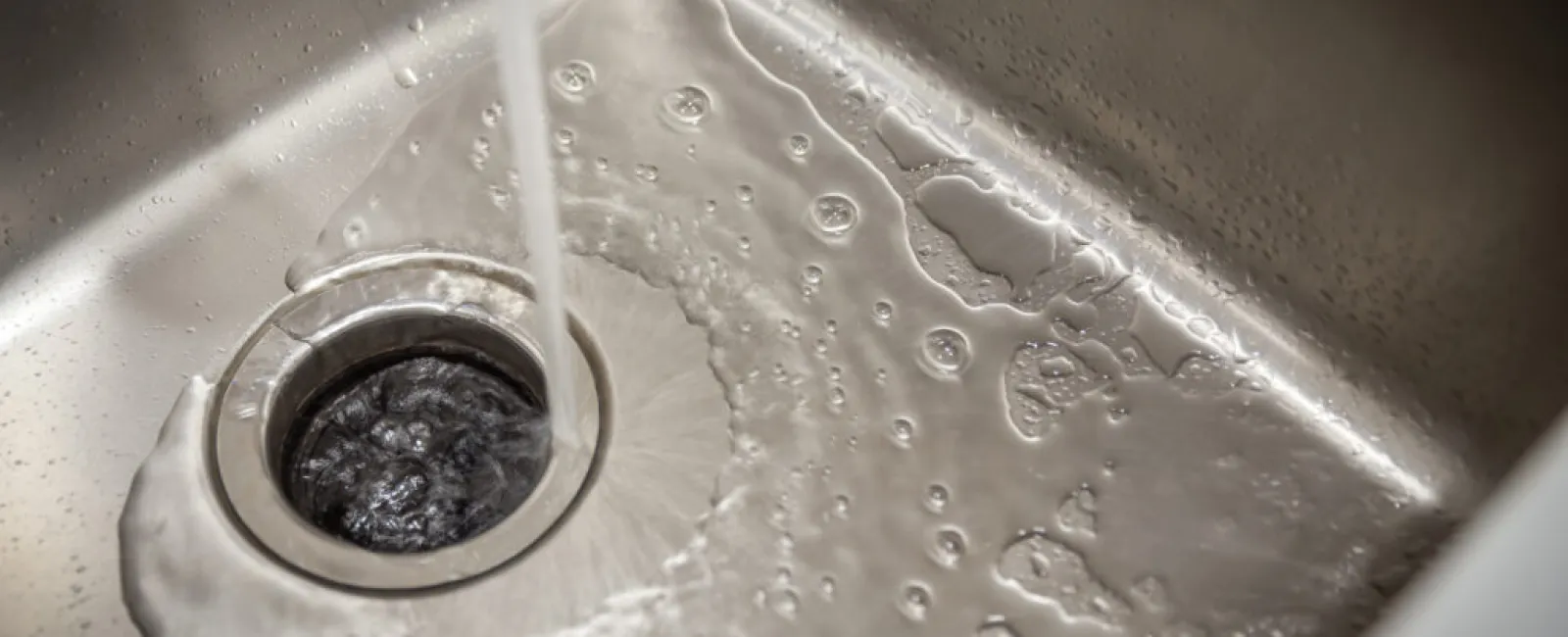
A garbage disposal that backs up into the sink is almost always a sign of a clog, either inside the disposal itself or in the drain line below it. The water and food debris have nowhere to go, so they push back up through the drain opening into the sink basin. Most backups can be cleared at home in under an hour. Still, recurring backups, foul odors, or water rising in both sink basins usually indicate a deeper drain line problem that requires professional attention.
Understanding why this happens, how to fix it safely, and how to keep it from happening again can save you hundreds in plumbing bills and protect your kitchen plumbing for the long haul.
What Causes a Garbage Disposal to Back Up Into the Sink
A backup is a symptom, not the actual problem. The water rising in your sink is just the visible part. The real issue lies deeper in your plumbing, and pinpointing the cause is the first step toward a real fix.
Clogged garbage disposal chamber
The most common cause is a clog inside the disposal itself. Even though it's called a garbage disposal, it isn't a trash can. Fibrous foods like celery and onion skins wrap around the blades, starchy foods like pasta and rice swell with water and turn to paste, and grease cools and hardens into a thick coating that traps everything else. When the chamber gets packed, water can't drain through and pushes back up into the sink.
Clogged drain line below the disposal
Sometimes the disposal works fine, but the P-trap or the branch drain line underneath is the bottleneck. Grease buildup is the usual suspect here. As warm grease travels down the pipe, it cools, sticks to the pipe walls, and slowly narrows the passage until water can no longer flow through. Coffee grounds, eggshells, and small food particles get caught in the buildup, and the clog grows from there.
Blocked main line or vent stack
If your kitchen sink backs up at the same time as another fixture, like a tub or downstairs sink, the clog isn't local. It's in the main drain line. A blocked plumbing vent on the roof can also cause sluggish drainage and gurgling because the system can't pull air properly. Both situations are beyond the reach of household tools.
Worn-out or malfunctioning disposal
An older disposal with dull blades doesn't grind food finely enough. Larger chunks slip past and accumulate in the drain line, where they catch grease and form clogs. If your disposal hums but doesn't grind, jams frequently, or leaks under the sink, the unit itself is likely failing and contributing to repeat backups.
How to Fix a Garbage Disposal Backing Up Into Your Sink
Most backups can be resolved with basic tools and a methodical approach. Work through these steps in order, testing the drain after each one.
Step 1: Cut the power and inspect
Turn off the disposal at the wall switch and unplug it from the outlet beneath the sink. Never put your hand into a disposal without confirming the power is off. Shine a flashlight into the chamber and look for visible obstructions, such as utensils, fruit pits, or large food chunks. If you spot something, pull it out with long-handled tongs or pliers, never your fingers.
Step 2: Manually rotate the flywheel
Disposals come with a hex wrench (often clipped to the underside of the unit) that fits into a slot on the bottom of the unit. Insert the wrench and turn it back and forth several times to free up the flywheel. This breaks loose anything jamming the blades. Once it spins freely, press the red reset button on the bottom of the disposal.
Step 3: Plunge the sink
A standard cup plunger often does more than people expect. Fill the sink with a few inches of water to seal the plunger, cover the other drain opening if you have a double basin, and plunge firmly for thirty seconds. The pressure can dislodge a clog sitting just past the disposal in the P-trap.
Step 4: Clean the P-trap
Place a bucket under the curved pipe beneath the sink. Loosen the slip nuts by hand or with channel locks and remove the trap. Most clogs hide right here, packed with grease and food sludge. Clean it thoroughly, check the trap arm leading into the wall for additional buildup, and reassemble.
Step 5: Use a drain snake
If the trap is clear, the clog is further down the line. Feed a small handheld auger into the drain pipe through the wall opening. Crank it slowly, work it through the obstruction, then run hot water for a couple of minutes to flush the line.
When to skip the DIY route
Skip the steps above and call a plumber if water is also backing up in another fixture, you smell sewage, the backup keeps returning within days, or you've tried everything and the sink still won't drain. These signs point to a mainline issue or a failing disposal, both of which require professional equipment to diagnose properly.
How to Prevent Garbage Disposal Backups
Preventing a backup is far easier than fixing one. A handful of simple habits will keep your disposal and drain line flowing for years.
Know what should never go down the disposal
Disposals handle soft food scraps well, but several items account for most backups. Avoid grease, oil, and bacon fat, as they can solidify in pipes. Skip starchy foods like pasta, rice, and potato peels, which expand and form a paste. Keep out fibrous foods like celery, corn husks, and onion skins, as they can tangle the blades. Coffee grounds and eggshells, despite the popular myth that they sharpen the blades, settle in the P-trap and build up over time. When in doubt, scrape it into the trash.
Run cold water before, during, and after use.
Cold water keeps fats and oils soluble,d so the disposal can grind them into small pieces that flush through the pipe rather than coating the walls. Always run the water before turning on the disposal, and let it run for at least 15 seconds after the grinding stops to push everything fully past the trap.
Clean the disposal regularly.
Once a week, drop a handful of ice cubes and a tablespoon of dish soap into the chamber and run the disposal with cold water. The ice scours the grinding chamber, and the soap cuts through grease. Once a month, follow up with a citrus peel or a baking soda and vinegar flush to keep odors down and break up any lingering residue.
Schedule periodic drain maintenance.e
Even with perfect habits, kitchen drain lines accumulate buildup over time. A professional drain cleaning every couple of years keeps the entire line clear and catches small problems before they turn into emergency backups. It's the single most effective thing a homeowner can do for kitchen plumbing.
When to Call a Professional Plumber
Some backups are signals of bigger problems. Call a licensed plumber right away if multiple fixtures are draining slowly or backing up, you smell sewer gas in the kitchen, the disposal leaks from underneath, you hear gurgling from other drains when the sink runs, or you've cleared the same clog more than once in the past few months. These point to issues like a damaged sewer line, a tree root intrusion, or a failing disposal that needs replacement, and they require tools and expertise most homeowners don't have on hand.
A pro can run a camera inspection to see exactly what's happening inside the line, hydro-jet stubborn buildup, or replace a disposal cleanly without damaging your plumbing.
Frequently Asked Questions
Why does my garbage disposal back up when I run the dishwasher?
The dishwasher drain hose connects to the disposal on the side. If the disposal or drain line is even partially clogged, dishwasher water has no clear path and pushes back into the sink. Clearing the clog usually solves both problems at once.
Can I use chemical drain cleaners on a garbage disposal?
Avoid them. Harsh chemical cleaners can damage rubber seals and metal components inside the disposal, and if they don't fully clear the clog, you're left with caustic liquid sitting in the pipes. Mechanical methods and enzymatic cleaners are safer and more effective.
How long should a garbage disposal last?
A well-maintained disposal typically lasts ten to fifteen years. Frequent jams, persistent leaks, loud grinding noises, or repeated backups often mean the unit is at the end of its life, and replacement is more cost-effective than continued repairs.
Why does my disposal back up only when I run hot water?
Hot water melts grease in the line, briefly enlarging the passage. When the water cools, the grease re-hardens, often in a tighter formation than before. This pattern usually indicates significant grease buildup that needs to be mechanically cleared.
Get Your Sink Draining Again
A backed-up garbage disposal is one of those problems that rarely fix themselves and almost always get worse. If you've worked through the steps above and the water is still rising, or if you'd rather skip the DIY entirely, our team is ready to help. We'll diagnose the cause, properly clear the line, and get your kitchen back in working order the same day in most cases.
Call Tom Falk Plumbing & Heating at 717-872-2850 or book service online to schedule your visit.


