
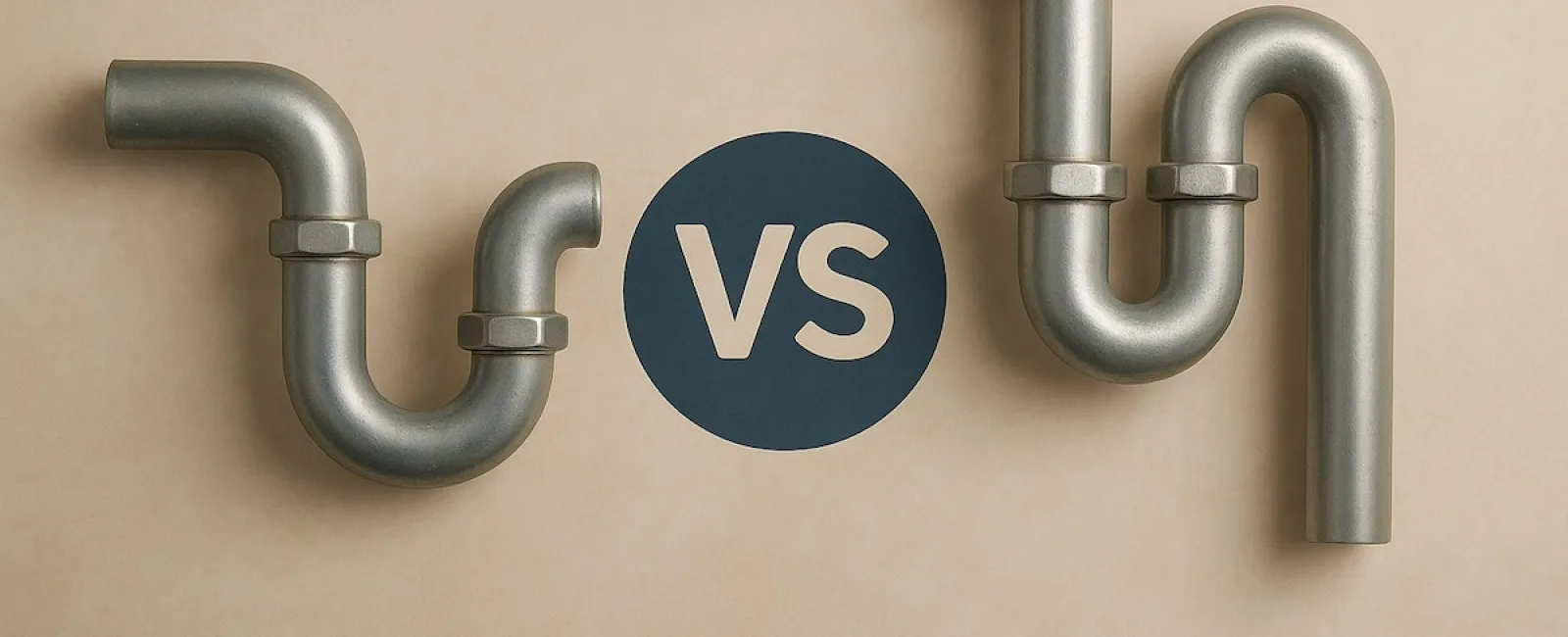
Among the most important elements of your plumbing system are traps, which play a vital role in preventing sewer gases from entering your living spaces. Two types of traps you may encounter are the P-trap and the S-trap. Understanding the differences between these traps is essential for homeowners, especially if you live in an older home.
A P-trap gets its name from its distinctive shape, which resembles the letter "P" when viewed from the side. It consists of a curved pipe that connects to the drainpipe from your sink or other fixture and then extends to connect to a horizontal drain line leading to the main sewer line. This unique design allows water to collect in the curve, creating a water seal that prevents sewer gases from entering your home. The P-trap also helps trap debris, preventing it from clogging your main drain.
An S-trap, on the other hand, derives its name from its "S" shape when viewed from the side. The first curve connects to the fixture's drainpipe, while the second curve drops vertically to connect to the drain line below. Like a P-trap, an S-trap is designed to hold water in its curves to block sewer gases from entering the fixture.
Key Differences Between P-Traps and S-Traps
While both P-traps and S-traps serve the purpose of preventing sewer gas intrusion, they have critical differences that affect their performance and legality. The most significant difference is in how they connect to your drain system. A P-trap connects to a horizontal drain pipe with proper venting, while an S-trap connects directly to a vertical drain pipe, which creates problems with proper venting.
Due to their design, P-traps are much less prone to siphoning issues than S-traps. Siphoning occurs when water is pulled completely out of the trap, eliminating the water seal and allowing sewer gases to enter your home. S-traps are highly susceptible to this problem because they lack proper atmospheric venting, which is why they are prohibited by modern plumbing codes in most jurisdictions, including Pennsylvania.
Understanding Modern Plumbing Codes
It's important to know that S-traps are no longer permitted under current plumbing codes. The International Plumbing Code (IPC) and Uniform Plumbing Code (UPC), which govern plumbing installations across the United States, have banned S-traps due to their inherent design flaws and tendency to lose their water seal.
If you discover an S-trap in your home, it's likely because your plumbing was installed before modern codes were adopted, typically before the 1970s or 1980s. While you may not be required to replace it immediately, it's highly recommended to upgrade to a P-trap configuration to ensure proper function and prevent sewer gas problems.
When considering any plumbing work, always consult local building codes and work with a licensed professional like Tom Falk Plumbing & Heating to ensure compliance with current regulations.
Understanding the P-Trap
A P-trap is the standard component in modern plumbing systems for preventing sewer gases from entering your home. The purpose of a P-trap is to create a reliable water seal that prevents odors and harmful gases from escaping through the drain pipes and entering your living spaces.
The P-trap is installed beneath sinks, bathtubs, showers, and other fixtures that have drains. The trap consists of a curved section of pipe with one end connected to the fixture's drainpipe and the other connected to a horizontal drain line that leads to the main sewer line. This horizontal connection is crucial because it allows for proper venting, which prevents siphoning.
How P-Traps Work
When water flows down the drain, it passes through the P-trap and fills the curved section. This standing water forms a seal that prevents gases from traveling back up through your drain. The weight and volume of the water help maintain this seal even when there is no active flow in the drainpipe.
The key to a P-trap's success is proper venting. A vent pipe connected to the drain system allows air to enter the pipes, which prevents negative pressure from forming and siphoning the water out of the trap. This is why P-traps are considered the superior and code-compliant option.
Advantages of P-Traps
One major advantage of using a P-trap is its effectiveness in preventing sewer gases from entering your home. By creating a reliable water seal with proper venting, it acts as a consistent barrier against foul odors and potentially harmful gases such as methane and hydrogen sulfide. This ensures better air quality and protects your family from respiratory issues or other health problems associated with exposure to these gases.
Another advantage is the P-trap's versatility and ease of maintenance. It can be installed in various plumbing fixtures such as sinks, bathtubs, showers, and kitchen sinks. Many P-traps feature a cleanout plug or are designed with threaded connections that allow for easy removal and cleaning without requiring extensive plumbing work. This makes routine maintenance much simpler for homeowners and plumbers alike.
P-traps are also the only legally compliant option for new installations and renovations, which means using them protects your investment and ensures your plumbing work passes inspection.
Disadvantages of P-Traps
While P-traps are the superior option, they do have some potential issues. One common problem is that the water seal can evaporate if the fixture isn't used regularly, particularly in guest bathrooms or seasonal homes. This can lead to the escape of sewer gases and unpleasant odors. Running water through unused drains periodically helps maintain the seal.
Additionally, the curved shape of a P-trap can collect debris over time. Hair, soap scum, food particles, and other substances can accumulate in the bend of the trap, leading to slow drainage or complete blockage. Regular cleaning and debris removal are essential to prevent these issues. The good news is that P-traps are designed to be easily accessible for cleaning.
Understanding the S-Trap
The S-trap is a type of plumbing trap commonly found in older buildings, particularly in homes built before the 1970s. While the S-trap was once an accepted plumbing practice, it's now considered obsolete and is prohibited by modern building codes.
The purpose and function of an S-trap are similar to that of a P-trap—it's designed to create a water seal that prevents sewer gases from flowing back into your home through the drain pipe. The S-trap consists of a curved section of pipe with one end connected to the fixture's drain and the other connected vertically to the waste line below. This curved section is intended to hold water, creating a barrier against sewer gases.
How S-Traps Work (and Why They Fail)
An S-trap operates on the same basic principle as a P-trap - using standing water to block sewer gases. However, the critical flaw in the S-trap design is its connection directly to a vertical drain without proper atmospheric venting.
When water flows through an S-trap, it creates suction behind it. Without adequate venting to equalize the pressure, this suction can pull all the water out of the trap through a process called self-siphoning. Once the water seal is lost, sewer gases can flow freely into your home. This is why S-traps are considered unreliable and have been banned by plumbing codes.
Why S-Traps Were Phased Out
S-traps were common in older plumbing installations because they were simpler to install in certain situations, particularly when the drain line was directly below the fixture. However, as plumbers and building officials better understood the importance of proper venting in plumbing systems, S-traps were recognized as fundamentally flawed.
The International Plumbing Code and other governing bodies determined that the siphoning problem inherent in S-traps made them unsuitable for reliable, safe plumbing systems. As a result, they've been prohibited in new construction and major renovations for several decades.
Disadvantages of S-Traps
The primary disadvantage of an S-trap is its tendency to lose its water seal through self-siphoning. When a large volume of water flows through the drain quickly—such as when emptying a sink or flushing a toilet—it creates negative pressure in the trap. Without proper venting, this pressure differential can pull all the water out of the trap, eliminating the barrier against sewer gases.
This means that even when functioning as designed, an S-trap is prone to failure. You might notice sewer odors in your home intermittently, particularly after heavy water use. These odors indicate that the trap has lost its seal and needs attention.
Another disadvantage is that S-traps are more susceptible to clogging due to their configuration. The double curve can trap debris and waste more easily than a P-trap, leading to blockages over time. This can result in slow drainage or complete blockage, often requiring professional intervention to resolve.
Finally, S-traps are not code-compliant, which means if you're doing any permitted plumbing work, an inspector will require you to replace any S-traps with properly vented P-traps.
Important Factors When Dealing with Traps
If you're building a new home, renovating, or replacing plumbing fixtures, there are several critical factors to understand about plumbing traps.
First and foremost, understand that P-traps are the only code-compliant option for modern plumbing installations. S-traps are prohibited under current Pennsylvania plumbing codes and will not pass inspection. Any new plumbing work must use properly vented P-trap configurations.
If you discover an S-trap in your existing plumbing, you have several options. While you may not be legally required to replace it immediately (existing installations are often grandfathered in), it's strongly recommended that you upgrade to a P-trap configuration, especially if you're experiencing odor problems or if you're doing any other plumbing work in that area.
Replacing an S-Trap with a P-Trap
Replacing an S-trap with a P-trap typically requires some modification to your plumbing configuration. Because a P-trap connects to a horizontal drain line rather than a vertical one, your plumber may need to reroute the drain piping and install proper venting. This is more involved than a simple trap replacement, but it's the correct solution that ensures code compliance and reliable performance.
The experienced team at Tom Falk Plumbing & Heating can assess your existing plumbing, explain your options, and perform the necessary upgrades to bring your system up to current standards. We've been working with older homes in Pennsylvania since 1961 and understand the unique challenges of updating vintage plumbing systems.
Maintenance and Cleaning Considerations
When it comes to maintaining your plumbing traps, P-traps are significantly easier to work with than S-traps. Most P-traps feature a cleanout plug at the bottom of the curve, or they can be easily disassembled using basic tools. This allows homeowners or plumbers to quickly clear clogs and remove accumulated debris without extensive work.
S-traps, due to their configuration and often their age, are typically more difficult to access and clean. Their complex shape and the way they're installed can make routine maintenance challenging. Additionally, because S-traps are found in older homes, the pipes themselves may be corroded or made of outdated materials, making them more fragile during service.
Regular maintenance is important for any trap. Even with proper venting, P-traps should be periodically checked and cleaned to prevent buildup. For infrequently used fixtures, running water through the drain every few weeks helps maintain the water seal and prevents evaporation.
Long-Term Performance and Reliability
When considering the long-term performance of your plumbing system, P-traps are unquestionably the superior choice. Their design, when properly installed with adequate venting, provides a consistent and reliable barrier against sewer gases. The water seal remains intact under normal use, and the trap functions as intended for many years with minimal maintenance.
S-traps, even when functioning optimally, are inherently less reliable due to their self-siphoning tendency. Over time, the repeated loss of the water seal can lead to chronic odor problems and potential health concerns from exposure to sewer gases. The design simply cannot provide the same level of performance as a properly vented P-trap.
From a property value perspective, having code-compliant plumbing is important. If you're selling your home, an inspector may flag S-traps as an issue that requires attention. Upgrading to P-traps proactively can prevent complications during a home sale and demonstrate that your plumbing system has been properly maintained.
Trust Tom Falk Plumbing & Heating for Professional Guidance
Whether you've discovered an S-trap in your older home or you're planning new plumbing work, the experienced team at Tom Falk Plumbing & Heating can help. We've been serving the local community since 1961, and our skilled technicians understand both modern plumbing codes and the unique challenges of working with older plumbing systems.
We can assess your current plumbing configuration, explain your options for upgrading S-traps to code-compliant P-traps, and perform the work with the quality craftsmanship our family business is known for. We treat every job like it's in our own home, working cleanly and efficiently to minimize disruption to your daily routine.
Don't let outdated S-traps compromise your home's air quality or create ongoing odor problems. Our team can provide honest advice about whether replacement is necessary and complete the work to current code standards.
Contact Tom Falk Plumbing & Heating today at 717-872-2850 to schedule your plumbing service or consultation.


